
6 min. read
In this article
Presentation at the International Congress in Tokyo
At the 2nd JGES International in Tokyo, KOEDA presented the current development status and intended applications of its anchoring and drainage technologies to the international interventional endoscopy community.
Preclinical Design and Workflow Evaluation in Sendai
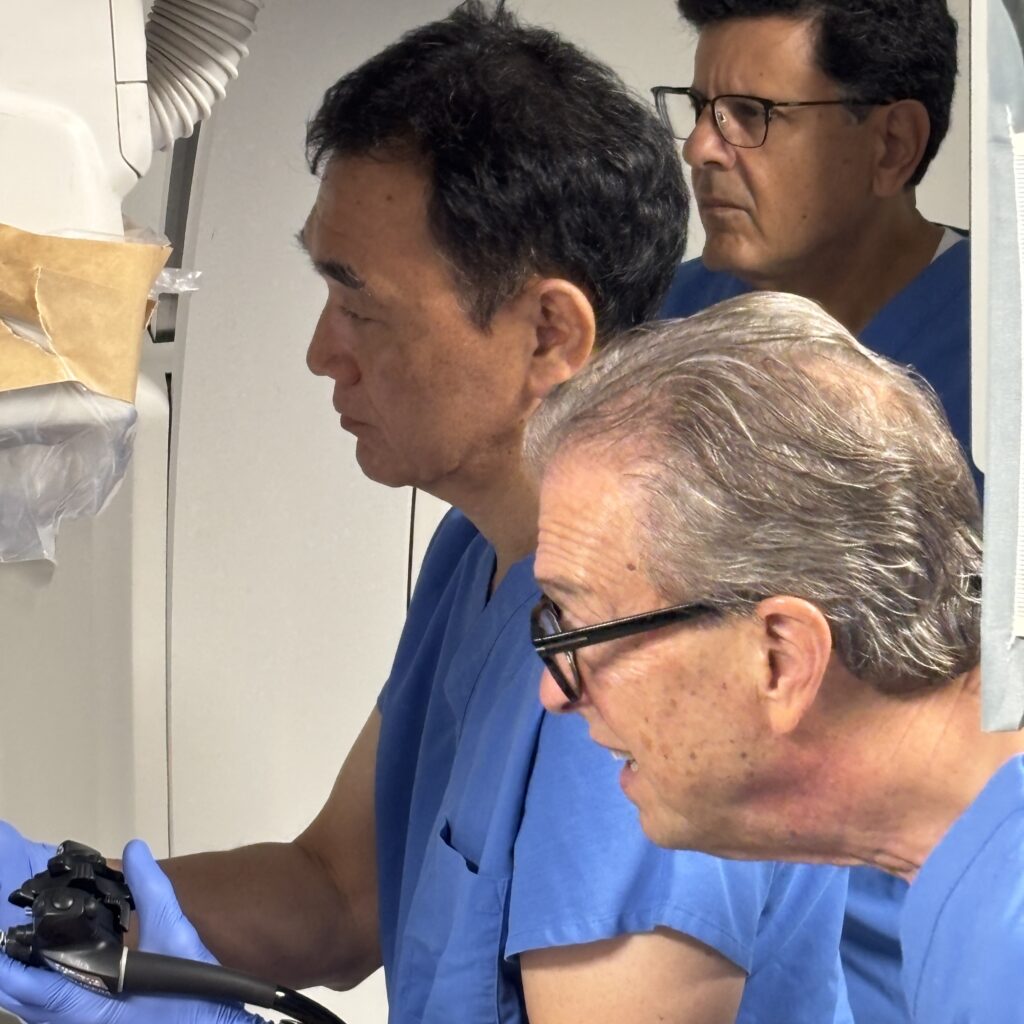
Three internationally recognized experts subsequently evaluated the complete KOEDA™ System workflow for EUS-GBD in a controlled preclinical in vivo model in Sendai. One expert also performed EUS-GJ using the Endoscopic Anchor with a Hot SEMS.
Outcomes and Development Implications
All three guest operators completed the EUS-GBD workflow. Their feedback focused on secure anchor placement, drainage tube visualization, and the clarity of the procedural sequence.
KOEDA at the 2nd JGES International Congress
For the second time, JGES International brought leading specialists in therapeutic endoscopy to Tokyo. At the accompanying industry exhibition, the KOEDA team presented the world’s first endoscopic organ anchor system and the integrated drainage tube system. The team outlined the rationale for temporary organ anchoring and the intended roles of both systems in endoscopic ultrasound-guided gallbladder drainage (EUS-GBD) and endoscopic ultrasound-guided gastrojejunostomy (EUS-GJ).
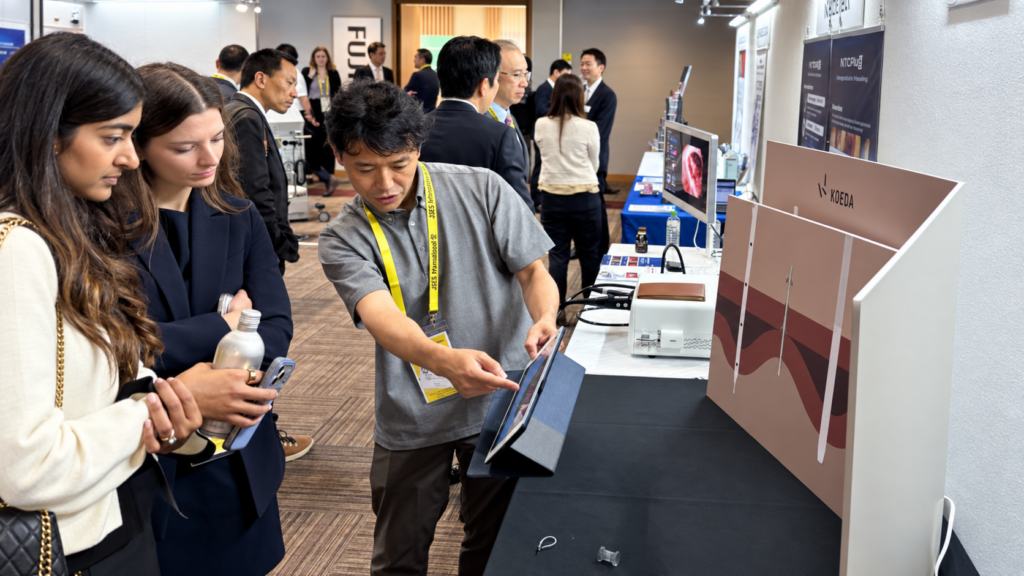
Physicians from Asia, North America, and Europe explored the concept in detail, showing considerable interest and enthusiasm. Their responses included focused questions about handling and workflow integration, as well as ideas for additional applications.
Independent Expert Evaluation from Tokyo to Sendai
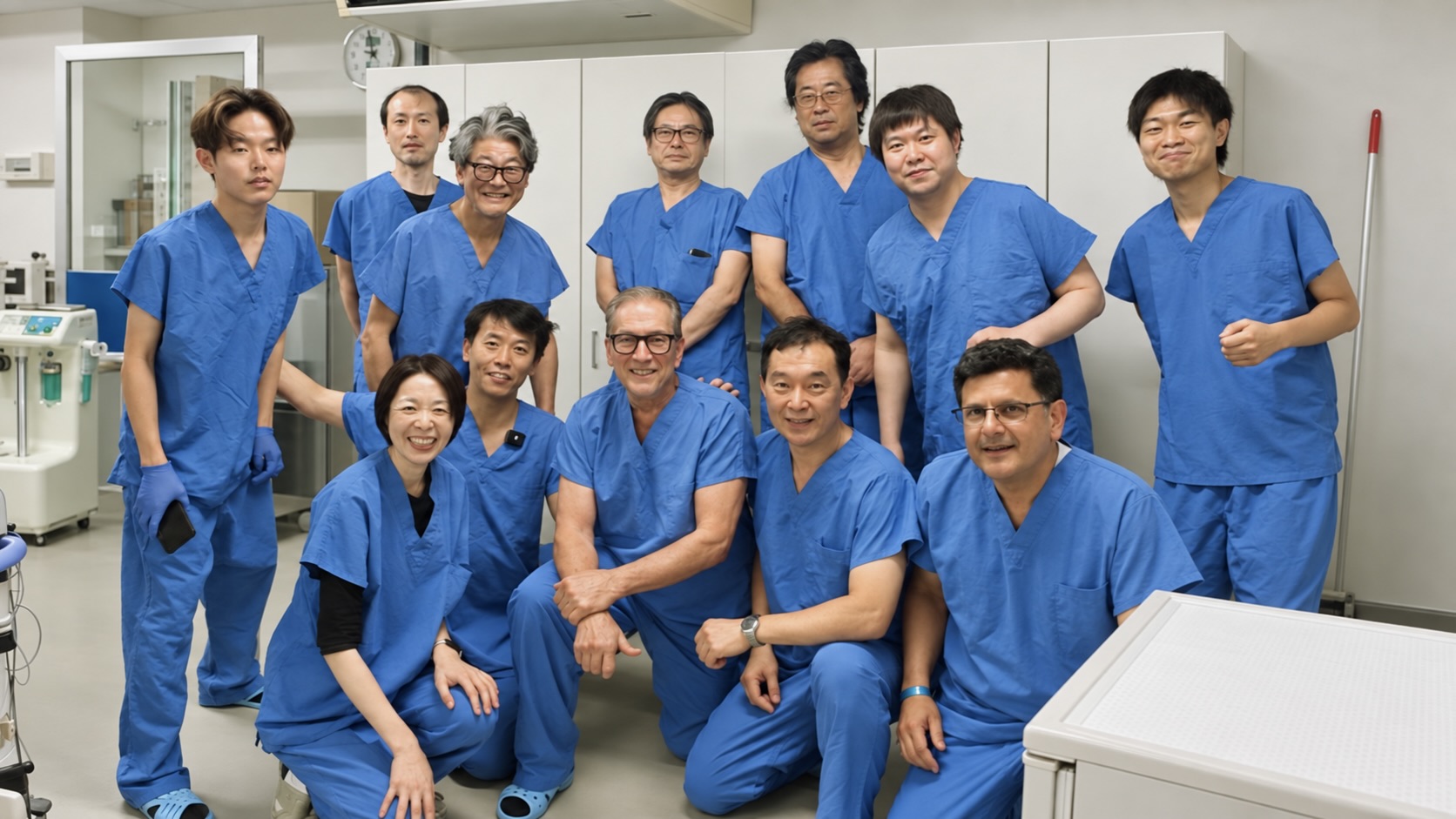
Following the congress, three internationally recognized experts accepted an invitation from Toru Okuzono, MD, PhD, to Sendai, KOEDA’s home city and the birthplace of the concept. Their hands-on evaluations brought individual procedural perspectives to the assessment of the KOEDA™ System:
- Norio Fukami, MD — Director of Therapeutic Endoscopy and Program Director, Advanced Endoscopy Fellowship, Mayo Clinic Arizona
- Stavros N. Stavropoulos, MD — Lead, 3rd Space & Endoscopic Surgery Program, Mount Sinai South Nassau, New York
- Gregory B. Haber, MD — Chief of Endoscopy, NYU Langone Health, New York
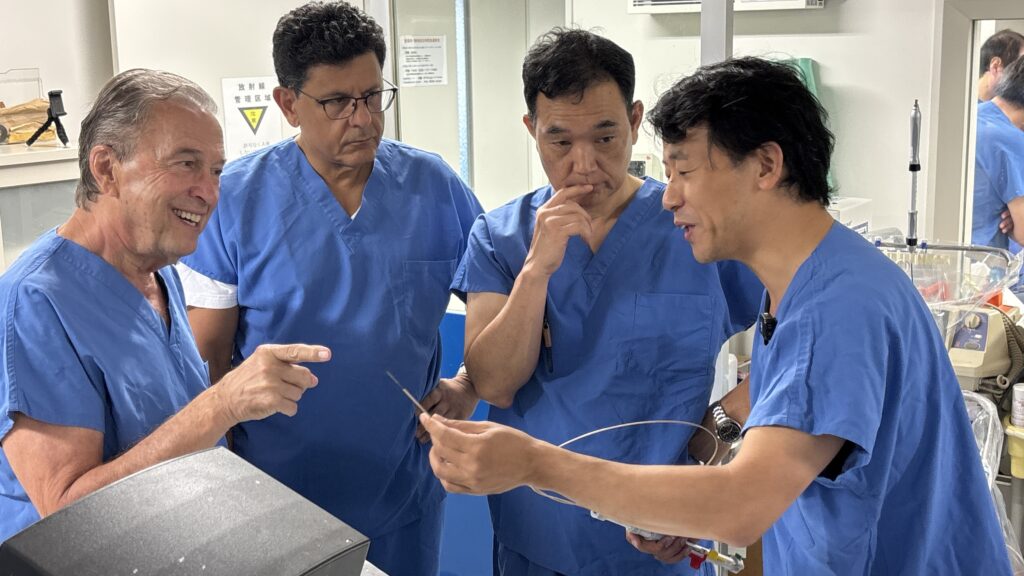
The study was designed as a controlled preclinical in vivo evaluation of the complete KOEDA™ System workflow. Direct use by three highly experienced endoscopists provided the basis for assessing system handling, procedural logic, and the ability to verify critical procedural steps under standardized test conditions.
Strong Results Across All Three Operators
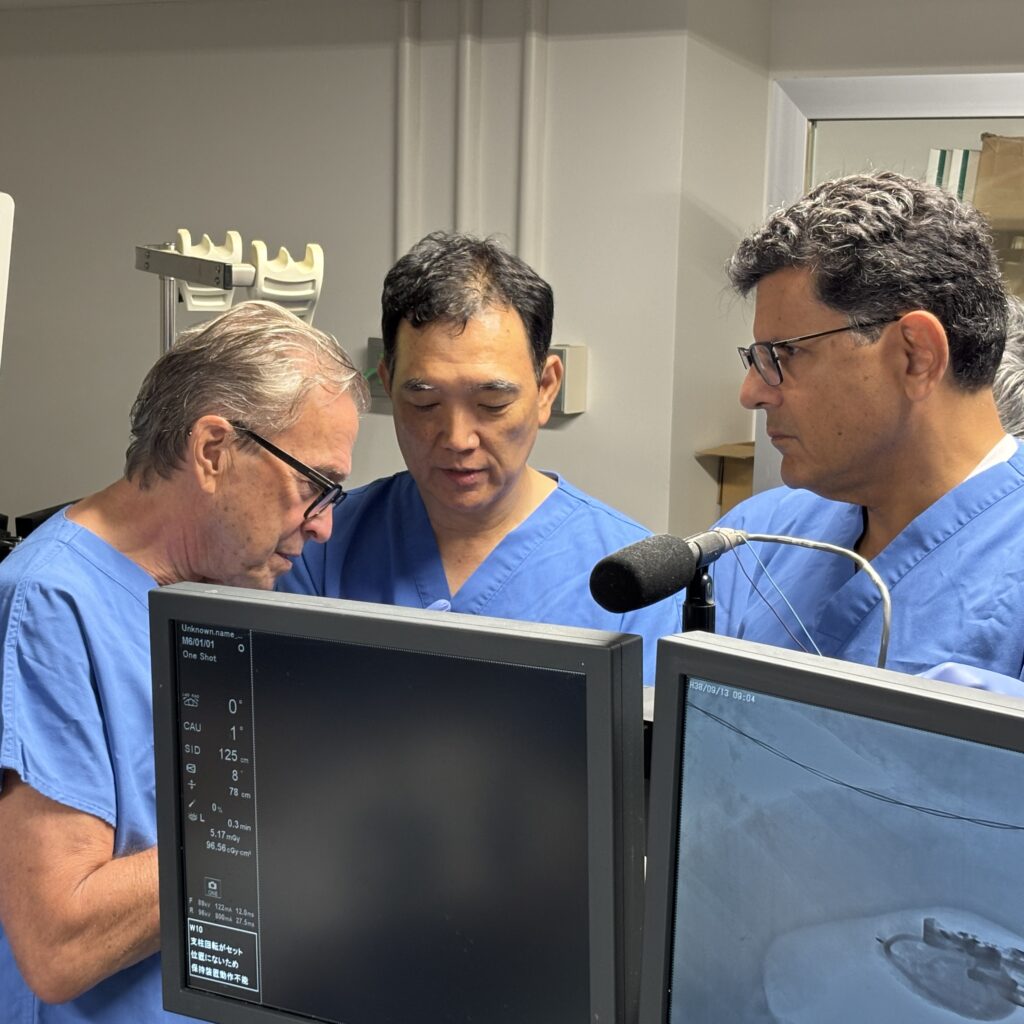
All three guest operators independently completed the full EUS-GBD workflow using the KOEDA™ Endoscopic Anchor System and Integrated Drainage Tube System. In this controlled preclinical setting, these results support the technical feasibility of the system and its procedural concept.
The evaluation covered every procedural step, from EUS-guided target access and anchor deployment for temporary tissue apposition to drainage tube placement, aspiration, irrigation, and release. Beyond technical completion, the evaluation focused on workflow clarity, critical procedural cues, and reliable verification at each step.
Dr. Haber also performed a complete EUS-GJ using the KOEDA™ Endoscopic Anchor together with an electrocautery-enhanced self-expandable metal stent (Hot SEMS), providing additional insight into the system’s potential application in advanced interventional EUS procedures.
Their hands-on experience also provided valuable feedback in three areas:
- confirmation of secure anchor placement
- visualization of drainage tube advancement
- clarity and intuitiveness of each procedural step
For KOEDA, technical device function is one component of reliable procedural execution. The development strategy therefore integrates device performance, a clearly defined workflow and confirmation at critical decision points.
“Our goal is not simply to create a device that works, but to develop an integrated system in which device, procedure and confirmation are designed together to support operator-independent reliability, timely detection and correction of deviations, and procedural safety.” Toru Okuzono, MD, PhD
Confirmed procedural steps provide clinicians with clear, verifiable feedback throughout the intervention. This enhances procedural confidence and contributes to consistent outcomes across operators. Combined with reliable device function and a standardized workflow. Further preclinical and clinical evaluation will help substantiate these benefits.
Scientific Collaboration Accelerates Progress
Effective medical device development combines engineering excellence with independent clinical judgment and the improvement cycles that follow. It is a rare privilege to work alongside three highly respected experts in this field. KOEDA thanks Dr. Fukami, Dr. Stavropoulos, and Dr. Haber for traveling to Sendai, engaging closely with the system, and contributing their expertise through open scientific exchange. Their insights confirmed the progress achieved and provided valuable feedback.