
Read in 3 min.
In this article
What potential applications were presented in the scientific programmes?
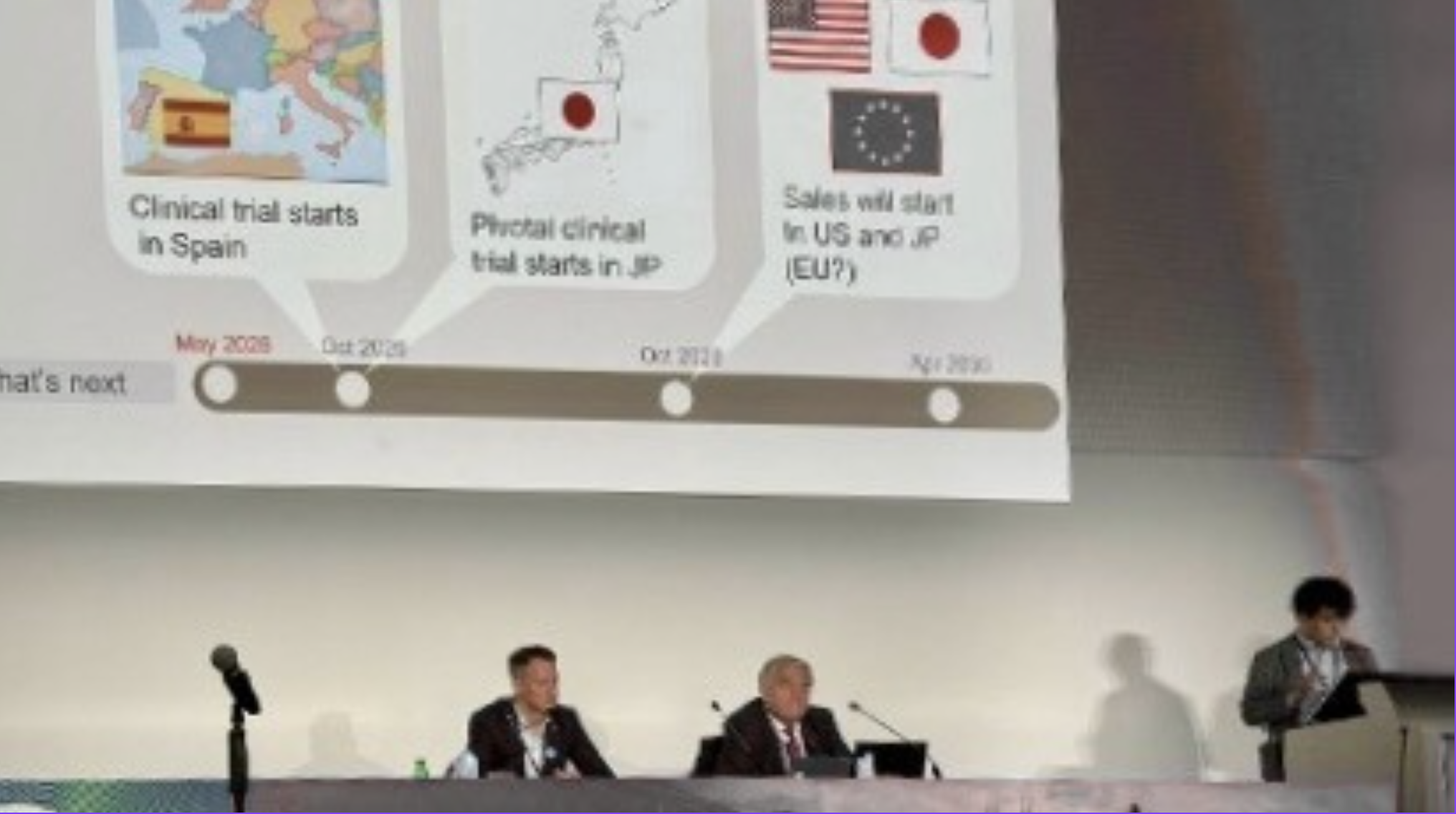
The KOEDA™ Endoscopic Anchoring System was presented at three congresses:
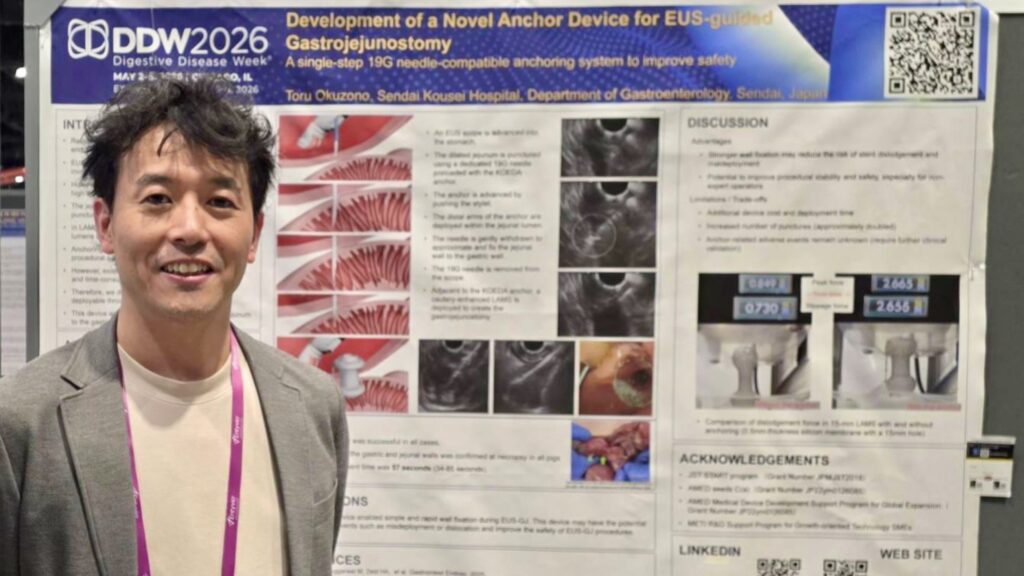
- DDW, Chicago, USA: Poster on a preclinical study in endoscopic ultrasound-guided gastrojejunostomy (EUS-GJ).
- ESGE Days, Milan, Italy: Presentation of the preclinical EUS-GJ study
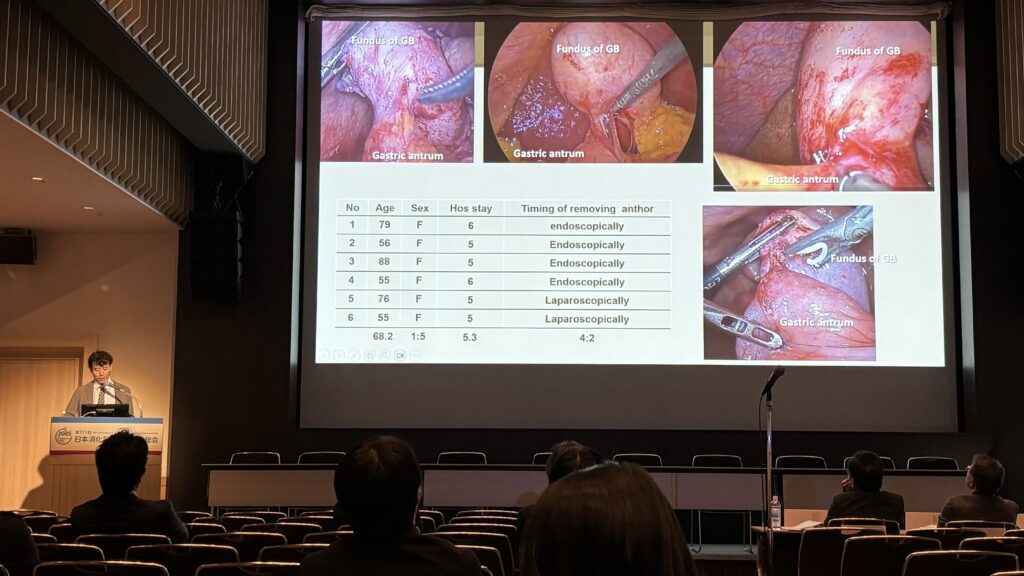
- JGES, Yokohama, Japan: Presentation of the potential application in endoscopic ultrasound-guided gallbladder drainage (EUS-GBD).
Did the expert discussions identify further potential applications?
Clinicians highlighted the challenge of endoscopic access after Roux-en-Y gastric bypass and identified this as a potentially relevant area for further investigation of the anchoring technology.
Addressing Procedural Challenges in Interventional EUS: KOEDA™ Endoscopic Anchor System Featured at Major Congresses
The KOEDA™ System is designed to provide temporary tissue approximation and stabilization during interventional endoscopic ultrasound (EUS) procedures. Its defining innovation is a compact anchor deployed in a single step through a dedicated 19-gauge needle prior to therapeutic device placement. This mechanism is particularly beneficial when mobile organs or tissue structures require precise alignment during critical procedural steps. At recent congresses, prospective applications in EUS-guided gallbladder drainage (EUS-GBD) and EUS-guided gastrojejunostomy (EUS-GJ) drew substantial interest, inspiring discussion on additional clinical scenarios that could benefit from this technology. By securing mobile tissue upfront, the system targets a core vulnerability in complex interventional EUS.
KOEDA's EUS-GJ animal data were presented at DDW and ESGE Days respectively; and the focus at the JGES was on the EUS-GBD development concept;
DDW and ESGE Days: Preclinical EUS-GJ Findings
At DDW, the poster presentation highlighted the EUS-GJ device concept, deployment sequence, and feasibility data. The nitinol anchor—available in 20 mm and 30 mm lengths—was pre-loaded into a dedicated 19-gauge needle. Following puncture of the saline-distended jejunum, stylet advancement deployed the distal arms. Subsequent needle withdrawal achieved approximation of the jejunal and gastric walls prior to placing an electrocautery-enhanced lumen-apposing metal stent. Successful retrieval using a standard polypectomy snare was also demonstrated.
At ESGE Days, the study was presented as a structured scientific abstract. In a five-swine live model, deployment was 100% successful, with anchor retention confirmed upon necropsy. The mean time from needle puncture to anchor deployment was 57 seconds (range: 34–85 seconds).
JGES: Development Focus on EUS-guided Gallbladder Drainage
At JGES, Dr. Okuzono presented KOEDA’s work on EUS-guided gallbladder drainage (EUS-GBD), a procedure where the gallbladder is accessed under EUS guidance for internal drainage. The core development rationale is to approximate and stabilize the gastric and gallbladder walls before subsequent device placement, offering enhanced control when precise tissue positioning is critical.
The presentation introduced this concept to a specialist Japanese audience highly experienced in advanced biliary interventions. A central clinical question addressed was whether controlled fixation can improve procedural reliability without introducing undue complexity or risk.
From a development perspective, the JGES discussion highlighted the rigorous effort required to translate an anchoring concept into a testable medical device—establishing a defined indication, a clear procedural role, and endpoints capable of evaluating safety and efficacy. This targeted approach maintains a precise scientific narrative while demonstrating how a core technical principle can be evaluated across multiple clinical applications.
The congress discussions reinforced the clinical relevance of controlled tissue approximation and identified post-Roux-en-Y anatomy as a promising field for further investigation.